Fire & Electrical safety Audit
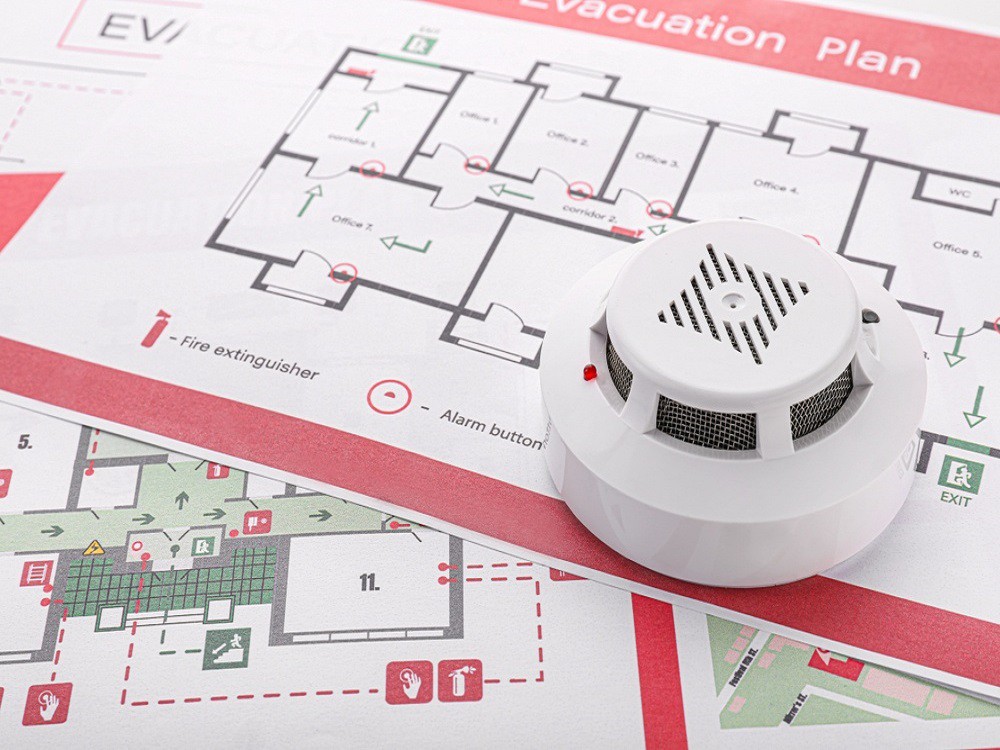
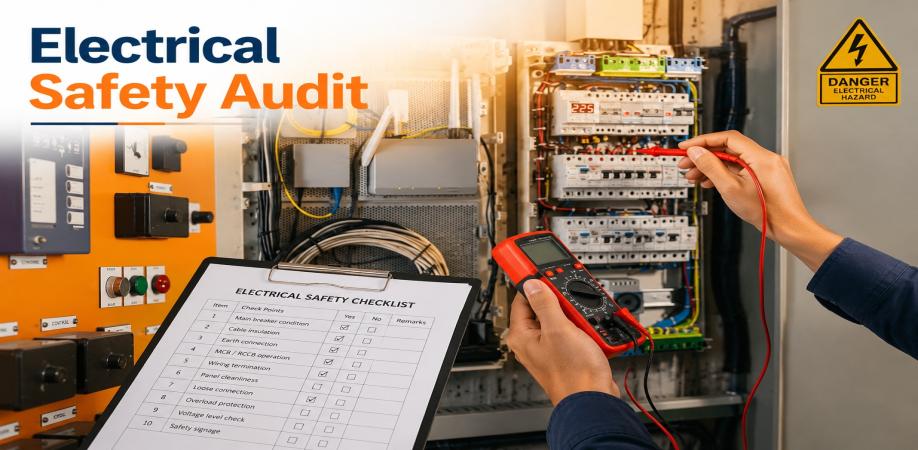
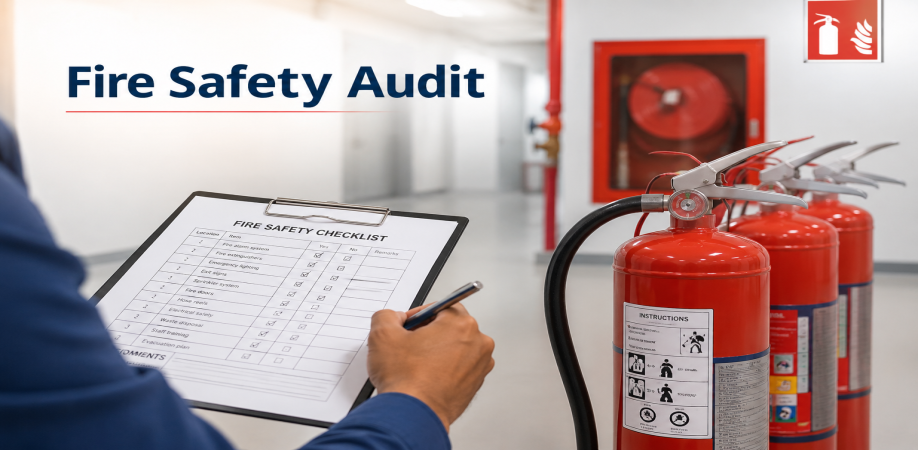
Ensuring Safety, Compliance, and Asset Protection for Your Business A systematic and thorough review of your building's fire protection and electrical systems, conducted by experts following international standards like NFPA and local regulations like BNBC. Identifying potential fire hazards and evaluating risks within your premises. Detailed examination of electrical systems to prevent shocks, short circuits, and fires. Ensuring adherence to national and international safety codes and standards. Evaluating your readiness for emergencies and effectiveness of response plans. Our comprehensive audits cover every critical component of your safety infrastructure. Investing in safety audits provides numerous advantages for your organization. Protecting your employees and visitors from potential hazards. Ensuring your operations meet all necessary legal and industry standards. Proactive safety measures can lead to lower premiums and fewer liabilities. Safeguarding your valuable infrastructure and equipment from damage. Better prepared for incidents, minimizing impact and ensuring swift action. A safer environment leads to fewer disruptions and increased productivity. Our expertise spans a wide range of sectors, ensuring tailored safety solutions.Comprehensive Electrical & Fire Safety Audits (NFPA, BNBC & RSC Compliant)
What is a Safety Audit?
Fire Risk Assessment
Electrical Safety Inspection
Regulatory Compliance Review
Emergency Preparedness
Key Aspects of Our Audit Services
Fire Safety Systems
Electrical Safety Systems
Benefits of Regular Safety Audits
Enhanced Workplace Safety
Regulatory Compliance
Reduced Insurance Costs
Asset Protection
Improved Emergency Response
Operational Efficiency
Industries We Serve
Garments & Textiles
Pharmaceuticals
Food & Beverage
Hospitals & Clinics
Commercial Buildings
Educational Institutions
Hotels & Resorts
Manufacturing Units
Consultancy for RSC, Nirapon & DIFE Approvals
Achieving regulatory compliance is a key requirement for establishing safety, building confidence, and ensuring continuous operations across industrial and commercial sectors in Bangladesh. Techno Apogee offers expert, end-to-end engineering consultancy services to guide your facility through the complex approval processes of the RMG Sustainability Council (RSC), Nirapon, the Department of Inspection for Factories and Establishments (DIFE), and other local authorities.
Key Regulatory Approvals We Handle
DIFE Licensing & Approvals
Complete consultancy for factory layout plan approvals, structural designs, and machine layout certification. We handle licensing documentation and renewal compliance under the Bangladesh Labour Rules for the Department of Inspection for Factories and Establishments.
RSC Compliance & CAP Closure
Guidance for RMG factories under the RMG Sustainability Council (RSC). Our engineers assist in carrying out safety inspections and completing Corrective Action Plans (CAP) for structural, electrical, and fire hazards to keep your business fully compliant.
Nirapon Safety Standards
Verification of safety protocols, compliance documentation, and emergency response capabilities. We align your facility's infrastructure with the safety monitoring framework defined by Nirapon and global brand buyers.
Our Technical Consultancy Services
Electrical SLD & Layout Plans
Drafting and validation of professional Electrical Single Line Diagrams (SLD) and Electrical Layout Plans (ELP) signed by IEB-certified engineers, ensuring compliance with BNBC and DIFE guidelines.
Fire Safety Plan Certification
Development and submission of Fire Safety Plans (FSP) for Fire Service and Civil Defence (FSCD) approval, including design layouts for detection, hydrant, sprinkler, and emergency exit routes.
Structural Integrity Testing
Detailed Engineering Assessments (DEA), building load-bearing capacity testing, concrete core tests, and steel reinforcement scanning as mandated by RSC, Nirapon, and DIFE.
Inspection & CAP Closure
Proactive assistance for closing audit findings. We prepare status reports, interface directly with regulatory inspectors, and coordinate documentation submissions to obtain final approval certificates.
Our Strict Compliance Framework
To ensure total reliability and standard conformity, all our inspection, audit, and design services adhere to recognized codes:
National Standards
- Bangladesh National Building Code (BNBC)
- Bangladesh Labour Act & Labour Rules
- Fire Service & Civil Defence Regulations
International Codes
- National Fire Protection Association (NFPA)
- RMG Sustainability Council (RSC) Guidelines
- Nirapon Audit Protocols & Safety Matrix
Why Choose Techno Apogee?
As a premier engineering consultant and EPC contractor in Bangladesh, we offer unmatched expertise and a dedicated engineering panel:
- IEB-Certified Engineers: Work directly with qualified chartered engineers and structural experts with years of regulatory experience.
- Proven Industrial Success: Completed safety assessments and closed compliance audits for over 100+ garments, pharmaceuticals, and manufacturing plants.
- Turnkey EPC Execution: We don't just point out faults—we provide active retrofitting, electrical rectifications, and complete installations under one roof.
- Official Representation: Seamless coordination with DIFE inspectors, RSC safety engineers, and Nirapon evaluators on your behalf.
NOC & Fire Safety Plan for FSCD
Fire Safety & Compliance
Understanding No Objection Certificates (NOC) and Fire Safety Plans (FSP)
Introduction
In Bangladesh, ensuring fire safety in buildings and industries is paramount. This involves adhering to strict regulations mandated by the Fire Service and Civil Defence (FSCD), which are based on international standards like NFPA (National Fire Protection Association) and local guidelines such as BNBC (Bangladesh National Building Code). Two critical components of this compliance are the No Objection Certificate (NOC) and the comprehensive Fire Safety Plan (FSP).
What is an NOC?
A No Objection Certificate (NOC) is an official certification issued by the Fire Service and Civil Defence (FSCD). It serves as a formal confirmation that a building or establishment complies with all relevant fire safety regulations and standards. Obtaining an NOC is a mandatory legal requirement for a wide range of structures and operations in Bangladesh.
Mandatory for:
- Industrial Buildings
- Commercial Establishments
- Residential High-Rises
- Hospitals and Healthcare Facilities
- Educational Institutions
- Hotels and Restaurants
- And many more public and private structures.
What is a Fire Safety Plan (FSP)?
A Fire Safety Plan (FSP) is a detailed and comprehensive document that outlines all measures related to fire prevention, protection, and emergency response within a building or facility. It is a living document that guides occupants and management on how to minimize fire risks and act effectively in case of a fire emergency.
Key Components of an FSP:
Fire Prevention Measures
- Risk assessment and hazard identification.
- Safe storage practices for flammable materials.
- Regular maintenance of electrical systems.
- Employee training on fire safety protocols.
Fire Protection Systems
- Details of fire detection systems (smoke detectors, heat detectors).
- Information on fire suppression systems (sprinklers, fire extinguishers).
- Passive fire protection (fire-rated walls, doors).
Emergency Response & Evacuation
- Clearly marked escape routes and emergency exits.
- Alarm procedures and communication protocols.
- Designated assembly points.
- Roles and responsibilities of fire wardens and emergency teams.
Process to Obtain NOC
-
1.
Prepare Fire Safety Plan (FSP):
Develop a comprehensive FSP tailored to the specific building or facility, ensuring it meets NFPA and BNBC standards.
-
2.
Submission to FSCD:
Submit the prepared FSP along with detailed building plans and other required documents to the Fire Service and Civil Defence (FSCD) department.
-
3.
FSCD Inspection and Assessment:
The FSCD conducts a thorough inspection of the premises and a fire risk assessment to verify compliance with the submitted FSP and safety regulations.
-
4.
Approval and Issuance:
Upon successful inspection and verification of compliance, the FSCD approves the FSP and issues the No Objection Certificate (NOC).
Benefits of NOC & FSP
Regulatory Compliance
Ensures adherence to national fire safety laws and regulations, avoiding penalties.
Enhanced Safety
Significantly improves the safety of occupants and property by mitigating fire risks.
Business License Requirement
Often a prerequisite for obtaining and renewing business licenses and permits.
Improved Insurance Eligibility
Can lead to better insurance terms and reduced premiums due to demonstrated safety.
Extra Low Voltage (ELV) System Design
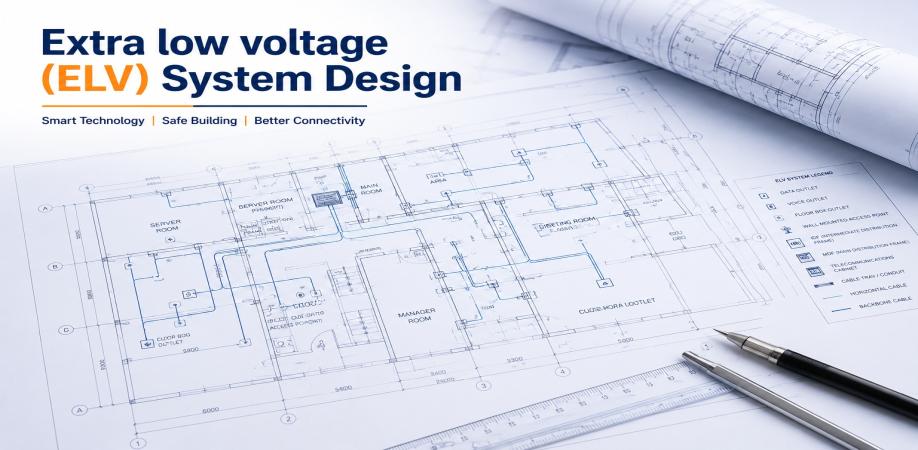
Extra Low Voltage (ELV) systems cover all electrical installations that operate on low voltage levels. They are widely used in modern buildings to handle communication, safety, automation, and entertainment needs. Because of their low voltage, these systems are safer, easier to maintain, and more energy-efficient compared to high-voltage power networks.
Telecommunications & Data
These systems form the backbone of communication in any facility. They include structured cabling for internet and phone lines, enabling smooth data transfer and reliable voice communication. A well-planned telecom network ensures minimal downtime and supports future scalability.
Security & Safety
Security ELV systems safeguard people and property through surveillance cameras, access control, and alarm systems. They help monitor activities, restrict unauthorized entry, and provide early warnings in case of fire or intrusion, ensuring a safer environment.
Building Automation
Automation systems integrate HVAC, lighting, and energy management into a single control platform. This improves operational efficiency, reduces energy waste, and allows remote monitoring, making buildings smarter and more sustainable.
Audio-Visual Systems
AV systems enhance communication and collaboration through public address systems, background music, and conferencing tools. They are essential for presentations, announcements, and creating an engaging environment in both commercial and public spaces.
Common Types of ELV Systems
Telecommunications & Data
- Structured cabling (LAN, Internet)
- Telephone systems
- Intercom solutions
Security & Safety
- IP & analog CCTV
- Access control devices
- Fire alarm systems
- Intruder detection
Building Automation
- Building Management (BMS)
- HVAC monitoring
- Smart lighting control
Audio-Visual Systems
- Public address (PA) systems
- Background music
- Conference equipment
Benefits of ELV
- Safety: Lower voltage reduces the chance of electrical hazards.
- Efficiency: Many digital devices operate efficiently at low power.
- Integration: Multiple systems can be connected under one management platform.
- Cost-effectiveness: Installation and maintenance are easier and less expensive.